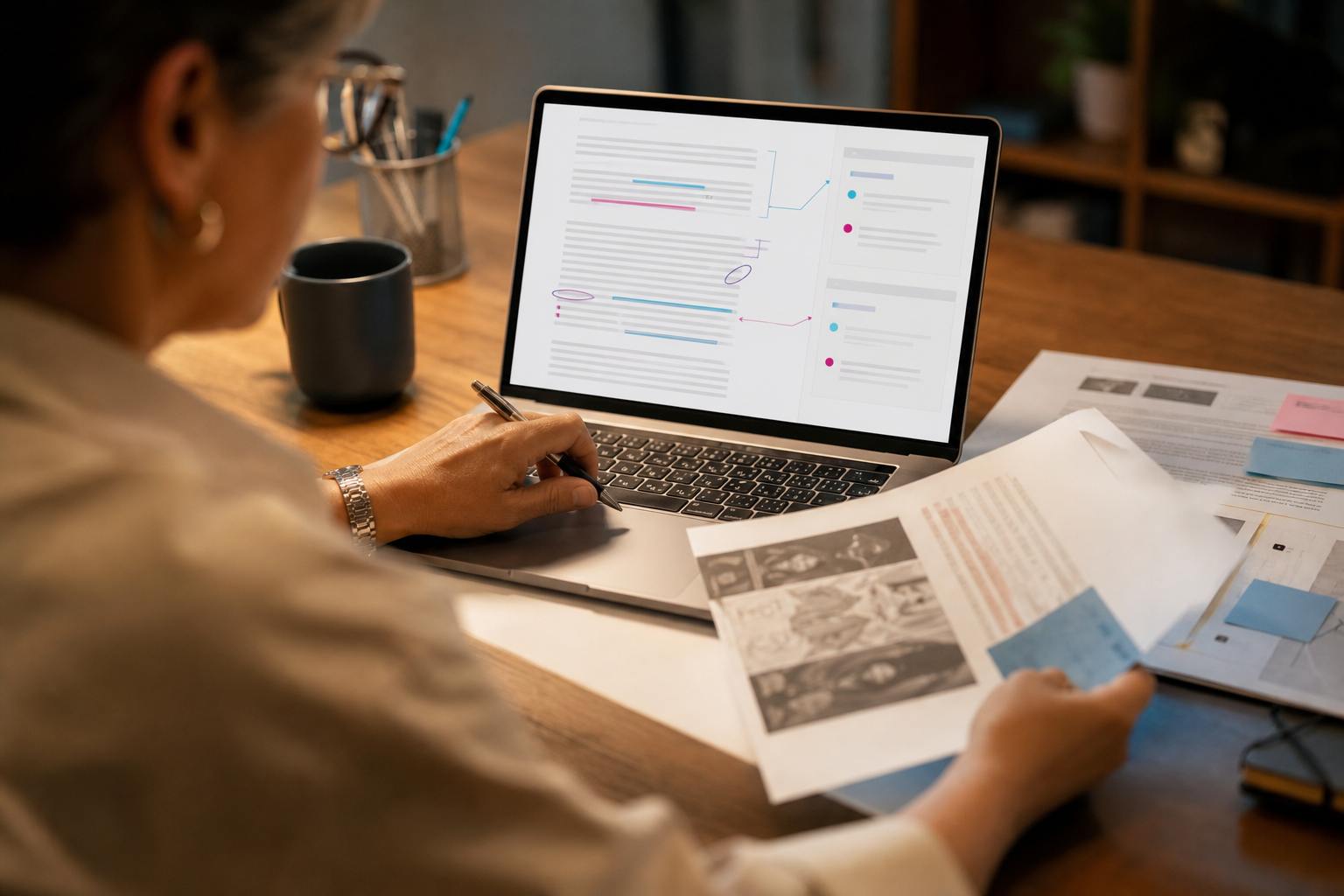
AI can help outline an article, simplify a technical explanation, or produce a first draft. It cannot take responsibility for what a publication tells its readers. That responsibility remains with the person or organization that chooses to publish the material.
A fluent draft can still be wrong
Language models are designed to produce plausible text. They may combine facts incorrectly, omit an important qualification, or present outdated information with confidence. An editor must verify names, dates, technical claims, quotations, and links against reliable sources.
The review should focus on meaning, not just grammar. A sentence can be perfectly written while giving the reader a false impression.
Original value requires judgment
A useful article needs a clear reason to exist. AI drafts often repeat familiar points, add generic introductions, and restate the conclusion. A human editor can remove that padding, choose a specific angle, add practical context, and decide what the audience actually needs.
Originality does not simply mean changing words. It comes from selection, experience, explanation, testing, reporting, or a genuinely helpful organization of information.
Tone reflects the publication
An assistant may produce exaggerated promises, promotional language, or a style that sounds impersonal. Editors shape the voice, avoid claims the evidence cannot support, and make sure sensitive subjects are treated appropriately.
They also notice when examples do not fit the reader. A technically correct explanation can still be unhelpful if it assumes too much knowledge or offers no practical next step.
Images and sources need review too
An image should accurately relate to the article and should not imply that a fictional scene is documentary evidence. Captions, alternative text, and usage rights matter. Generated images should be reviewed for distortions, misleading details, and accidental brand elements.
Links must lead to the claimed source. A source should be current enough for the topic and authoritative enough for the claim. Adding a link does not replace explaining the evidence fairly.
A simple editorial workflow
First, review the article’s purpose and structure. Next, verify factual claims and sources. Then remove repetition, improve clarity, and check whether the title matches the content. Review the image and metadata, preview the page on mobile, and complete a final read before publishing.
Keep AI-assisted work in draft status until those checks are complete. For high-stakes topics, involve someone with the appropriate expertise.
Human review is not a ceremonial approval at the end of automation. It is the process that gives the content accountability. AI can make drafting faster, but careful editing is what makes the finished article accurate, relevant, and worth a reader’s time.