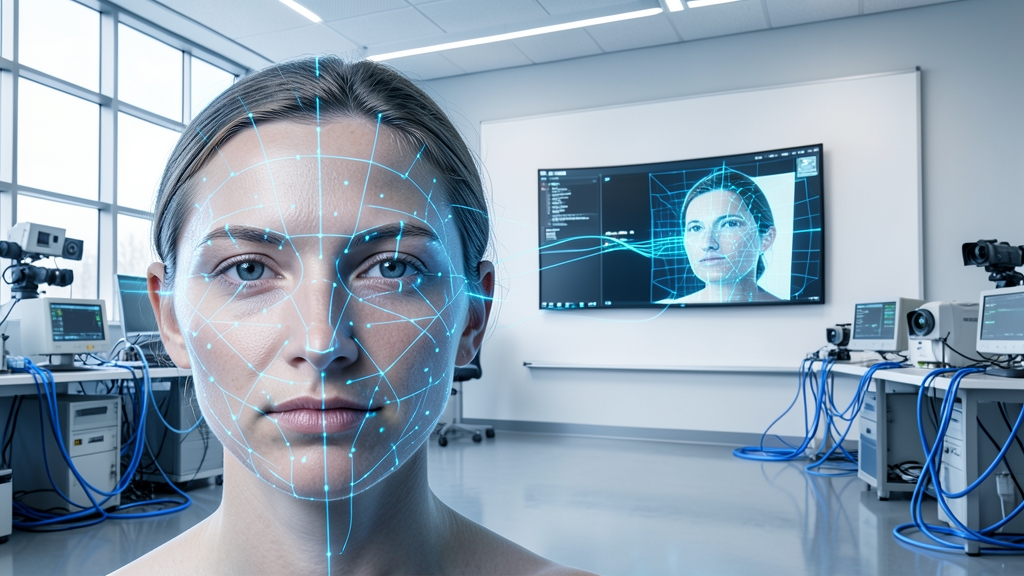
Biometric authentication is a rapidly growing field that uses unique physical characteristics to verify identities. One of the most popular forms of biometric authentication is facial recognition, which uses facial features to identify individuals. But have you ever wondered how facial recognition works? In this article, we'll delve into the science behind facial recognition technology and explore its applications in biometric authentication.
The Basics of Facial Recognition
Facial recognition technology uses a combination of computer vision and machine learning algorithms to identify individuals based on their facial features. The process typically involves capturing an image of a person's face, either through a camera or other imaging device, and then comparing it to a database of known faces. The algorithm uses various facial features, such as the distance between the eyes, the shape of the nose, and the contours of the jawline, to create a unique facial signature.
How Facial Recognition Algorithms Work
Facial recognition algorithms typically involve a series of steps, including face detection, face alignment, and face verification. Face detection involves locating the face within an image, while face alignment involves adjusting the image to ensure the face is properly oriented. Face verification involves comparing the facial signature to a database of known faces to determine a match. These algorithms can be based on various techniques, including deep learning, which uses neural networks to learn patterns in facial features.
Applications of Facial Recognition in Biometric Authentication
Facial recognition technology has a wide range of applications in biometric authentication, from security systems to consumer devices. For example, many smartphones use facial recognition to unlock the device, while some airports use facial recognition to verify the identities of travelers. Facial recognition can also be used in access control systems, such as those used in secure facilities or border control. Additionally, facial recognition can be used in law enforcement to identify suspects or missing persons.
Challenges and Limitations of Facial Recognition
While facial recognition technology has many benefits, it also has some challenges and limitations. For example, facial recognition algorithms can be affected by various factors, such as lighting conditions, facial expressions, and pose. Additionally, facial recognition can raise concerns about privacy and security, particularly if the technology is used without proper safeguards. Furthermore, facial recognition algorithms can be biased if they are not properly trained on diverse datasets, which can lead to inaccurate results.
The Future of Facial Recognition in Biometric Authentication
As facial recognition technology continues to evolve, we can expect to see more advanced and accurate algorithms, as well as increased adoption in various industries. For example, the use of 3D facial recognition, which uses depth information to create a more accurate facial signature, is becoming more prevalent. Additionally, the development of more secure and private facial recognition systems, such as those that use blockchain technology, is an area of ongoing research.
Practical recommendation
In conclusion, facial recognition technology is a powerful tool for biometric authentication, with a wide range of applications in security, consumer devices, and law enforcement. While there are challenges and limitations to the technology, ongoing research and development are addressing these issues and improving the accuracy and security of facial recognition systems. As the use of facial recognition technology becomes more widespread, it's essential to ensure that proper safeguards are in place to protect individual privacy and security.
Source: pages.nist.gov