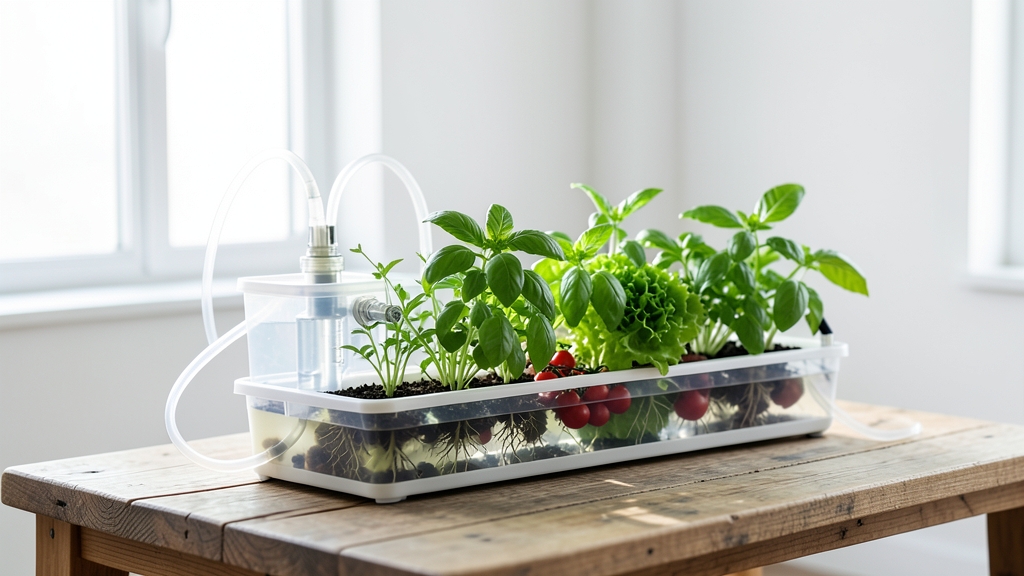
Hydroponics lets you grow plants without soil by delivering nutrients directly to the roots. With a few inexpensive supplies, you can create a small indoor system that produces fresh herbs and leafy greens all year. This article walks you through the essential steps, from choosing a container to managing the nutrient solution, so you can start harvesting in a matter of weeks.
1. Gather Your Materials
Select a shallow container (a plastic bucket or a large mason jar works well). You’ll need a growing medium such as coconut coir or perlite, a small pump or a simple air stone, a timer, a nutrient solution formulated for hydroponics, and a grow light (LED or fluorescent). For beginners, a 3‑inch LED grow light is sufficient and energy efficient. Keep the total cost under $100 by reusing items like a repurposed jar and a low‑cost water pump.
2. Set Up the Reservoir and Pump
Place the reservoir in a stable spot. Fill it with water and add the nutrient solution according to the manufacturer’s instructions. Install the pump at the bottom of the reservoir; it should push water up through a tube to the grow tray. Attach the tube to the tray, leaving a small gap so the water can drain back into the reservoir. If you don’t have a pump, a simple air stone connected to a small aquarium pump can circulate the solution.
3. Prepare the Growing Medium and Planting
Moisten your growing medium until it holds shape but is not dripping. Place the medium in the grow tray and position your seedlings or seeds. For herbs, start with about 10–12 plants. Ensure the roots are submerged in the nutrient solution but not sitting in standing water. Use a lightweight grow tray to allow easy drainage and prevent root rot.
4. Install Lighting and Maintain the System
Position the grow light 4–6 inches above the plant canopy. Use a timer to provide 12–16 hours of light per day, mimicking daylight. Monitor the pH of the nutrient solution weekly; it should stay between 5.5 and 6.5. Adjust with pH up or down solutions as needed. Check the water level daily and top up with fresh water and nutrients to keep the reservoir full.
5. Troubleshooting Common Issues
If plants show yellowing leaves, it may indicate nutrient deficiency or pH imbalance. Inspect for root rot—roots should be white and firm; brown, mushy roots need to be removed and the system cleaned. Keep the system tidy; debris can clog the pump. Regularly clean the grow light to maintain efficiency.
Practical recommendation
By following these steps, you can establish a reliable, low‑cost hydroponic garden that provides fresh produce whenever you need it. Start with a small setup, monitor plant health closely, and adjust nutrients and lighting as your plants grow. With minimal maintenance, you’ll enjoy a sustainable source of herbs and greens right at home.