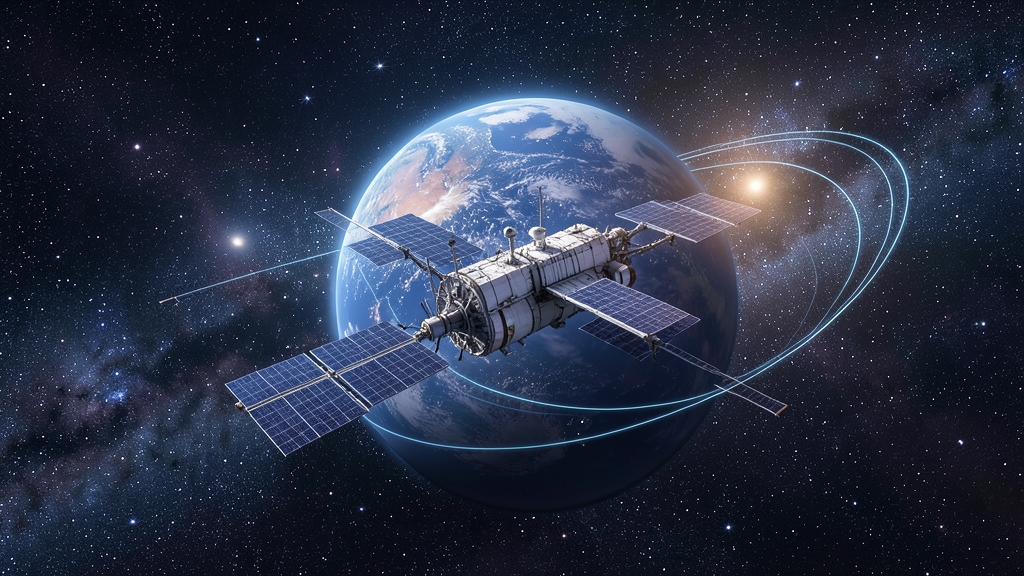
Space travel has become an integral part of modern space exploration, with numerous spacecraft and satellites being launched into orbit every year. However, the journey to space is not as simple as just launching a rocket and hoping for the best. The motion of celestial bodies and spacecraft is governed by a set of fundamental principles known as orbital mechanics, which play a crucial role in determining the success of a space mission. In this article, we will delve into the world of orbital mechanics and explore its key concepts and principles.
Launch Windows and Trajectories
One of the most critical aspects of orbital mechanics is the launch window, which refers to the specific time frame during which a spacecraft can be launched into a particular orbit. The launch window is determined by the position of the Earth, the Sun, and the target orbit, and it is crucial to launch the spacecraft within this window to ensure a successful mission. The trajectory of the spacecraft is also critical, as it must follow a precise path to reach its destination. This is achieved by using a combination of propulsion systems and gravitational forces to guide the spacecraft through space.
Gravitational Forces and Orbital Shapes
Gravitational forces play a significant role in orbital mechanics, as they determine the shape and size of an orbit. The gravitational force of a celestial body, such as the Earth, causes objects to follow curved trajectories, which are known as orbits. The shape of an orbit can be elliptical, circular, or hyperbolic, depending on the velocity of the spacecraft and the gravitational force of the celestial body. Understanding the gravitational forces and orbital shapes is essential for designing and executing successful space missions.
Orbital Maneuvers and Propulsion Systems
Once a spacecraft is in orbit, it must perform a series of orbital maneuvers to reach its final destination. These maneuvers include changing the altitude, inclination, and velocity of the spacecraft, and they require a combination of propulsion systems and gravitational forces. The choice of propulsion system depends on the specific mission requirements, and it can range from traditional chemical propulsion systems to more advanced ion engines and gravitational slingshots. Understanding the principles of orbital maneuvers and propulsion systems is critical for navigating the complexities of space travel.
Real-World Applications of Orbital Mechanics
Orbital mechanics has numerous real-world applications, ranging from satellite communications and navigation to space exploration and asteroid deflection. For example, the Global Positioning System (GPS) relies on a network of satellites in medium Earth orbit to provide location and timing information to users on the ground. Similarly, space agencies use orbital mechanics to plan and execute missions to other planets and celestial bodies, such as Mars and the Moon. By understanding the principles of orbital mechanics, scientists and engineers can design and execute complex space missions that expand our knowledge of the universe.
Practical recommendation
In conclusion, orbital mechanics is a fundamental aspect of space travel that plays a critical role in determining the success of a space mission. By understanding the principles of launch windows, trajectories, gravitational forces, and orbital maneuvers, scientists and engineers can design and execute complex space missions that expand our knowledge of the universe. As space travel continues to evolve and become more accessible, the importance of orbital mechanics will only continue to grow, and it is essential for anyone interested in space exploration to have a solid understanding of these fundamental principles.
Source: science.nasa.gov