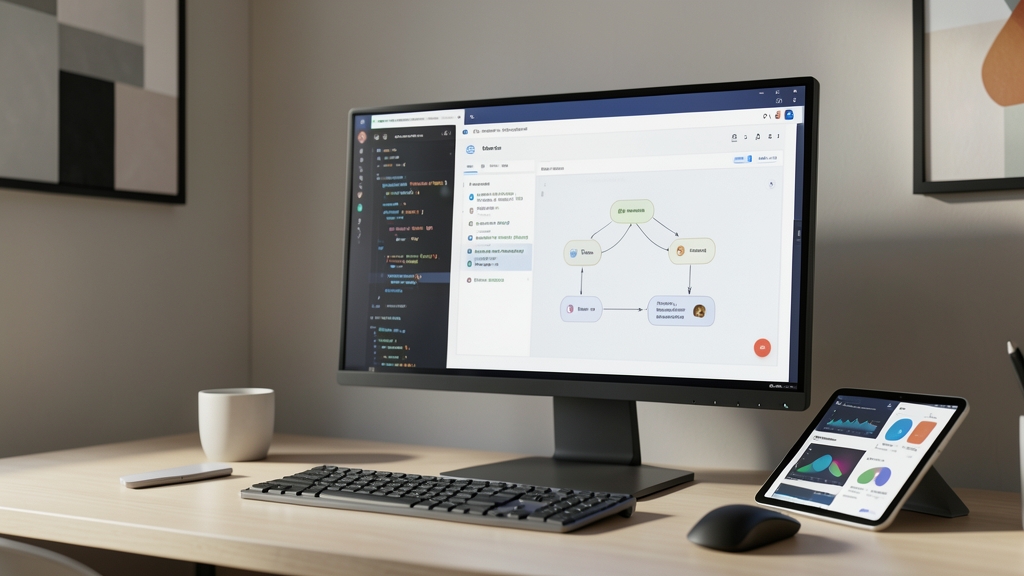
In today's digital age, providing excellent customer support is crucial for businesses to stay competitive. One way to achieve this is by leveraging artificial intelligence (AI) to power chatbots that can handle customer inquiries. In this article, we will explore how to build a simple AI-powered chatbot for customer support using natural language processing and machine learning. We will break down the process into manageable steps, making it easy for readers to follow and implement their own chatbot solution.
Understanding the Basics of Natural Language Processing
Natural language processing (NLP) is a subfield of AI that deals with the interaction between computers and humans in natural language. It is the technology that enables computers to understand, interpret, and generate human language. To build a chatbot, we need to understand the basics of NLP, including tokenization, sentiment analysis, and intent recognition. Tokenization is the process of breaking down text into individual words or tokens, while sentiment analysis involves determining the emotional tone or attitude conveyed by the text. Intent recognition, on the other hand, involves identifying the purpose or goal behind the text.
Choosing a Platform and Tools
To build a chatbot, we need to choose a platform and tools that support NLP and machine learning. Some popular options include Dialogflow, Microsoft Bot Framework, and Rasa. Dialogflow is a Google-owned platform that provides a visual interface for building chatbots, while Microsoft Bot Framework is a set of tools for building conversational AI solutions. Rasa, on the other hand, is an open-source platform that provides a flexible framework for building contextual chatbots. We will use Dialogflow as an example in this article, but the steps can be adapted to other platforms as well.
Designing the Chatbot's Conversation Flow
Once we have chosen a platform and tools, we need to design the chatbot's conversation flow. This involves defining the intents, entities, and responses that the chatbot will use to interact with customers. Intents represent the actions or goals that the customer wants to achieve, while entities represent the specific information or data that the customer provides. Responses, on the other hand, are the messages that the chatbot sends back to the customer. We can use a flowchart or state machine to visualize the conversation flow and ensure that it is logical and easy to follow.
Training and Testing the Chatbot
After designing the conversation flow, we need to train and test the chatbot using sample data and scenarios. This involves providing the chatbot with examples of customer inputs and expected responses, and then testing it to ensure that it can understand and respond correctly. We can use a combination of machine learning algorithms and rule-based systems to train the chatbot, depending on the complexity of the conversation flow. It is also important to test the chatbot with different types of customer inputs, including typos, grammatical errors, and ambiguous language.
Practical recommendation
Building a simple AI-powered chatbot for customer support is a manageable task that can be achieved with the right tools and knowledge. By understanding the basics of natural language processing, choosing the right platform and tools, designing a logical conversation flow, and training and testing the chatbot, we can create a chatbot that provides excellent customer support and improves the overall customer experience. As a practical recommendation, start by identifying the most common customer support queries and designing a chatbot that can handle those queries effectively. With time and practice, we can refine and improve the chatbot to handle more complex queries and provide even better support to our customers.