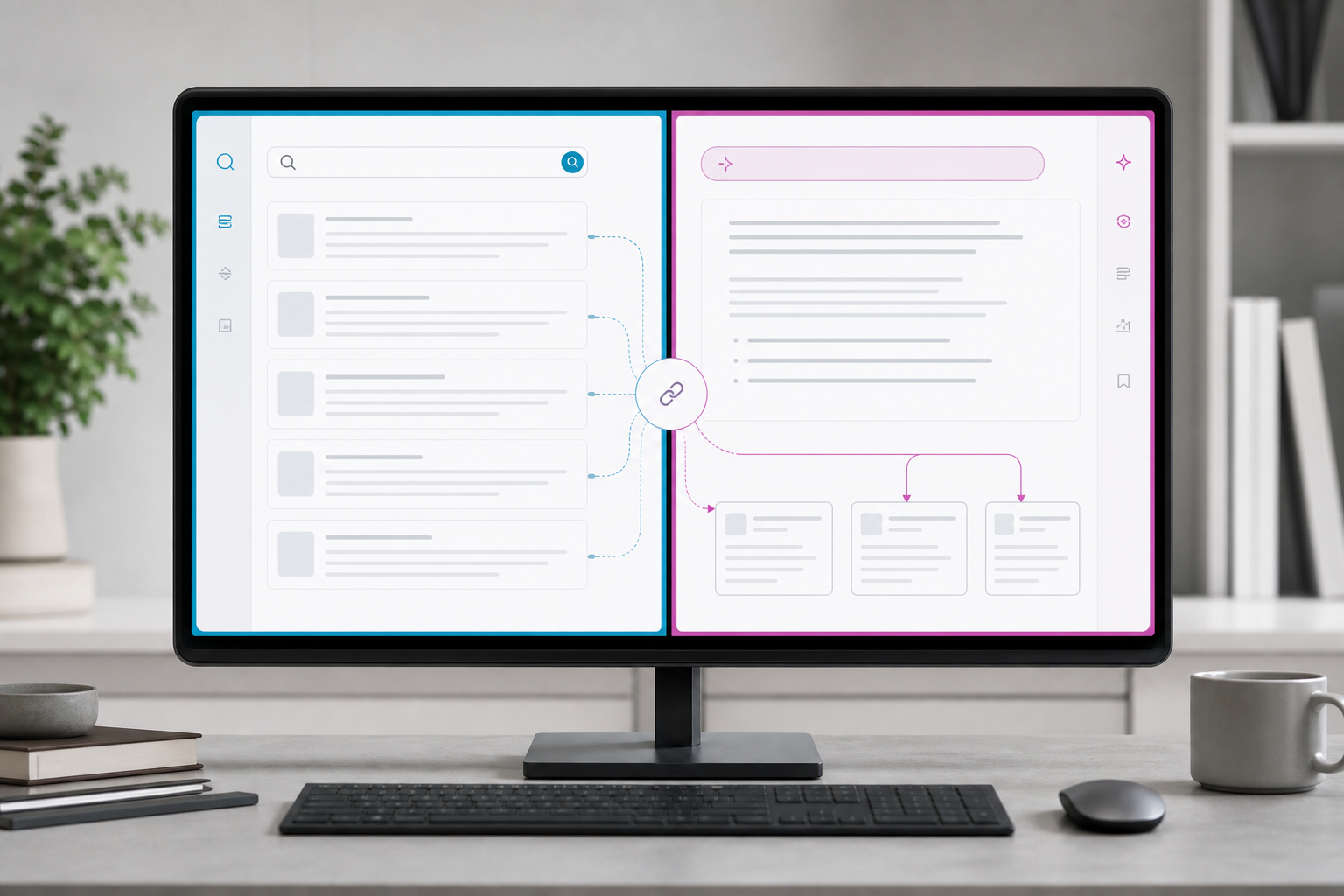
Traditional web search and AI-powered search both help people find information, but they place the work in different parts of the process. A conventional search engine usually returns a ranked list of pages. AI search often reads or retrieves material and presents a combined answer first.
From finding pages to receiving a summary
With traditional search, users choose a result, inspect the page, and compare it with other sources. The search engine helps locate material, but the final explanation usually comes from the publisher.
AI search can reduce those steps by synthesizing an answer. This is convenient for orientation, definitions, comparisons, and questions that would otherwise require opening several pages. It can also help users refine an unfamiliar topic.
The source relationship changes
A synthesized answer may separate a statement from the context of the page that supported it. Important qualifications, dates, or limitations can disappear during summarization. Citations help, but a cited page does not automatically support every sentence near the link.
Traditional results have their own problems. Ranking does not guarantee accuracy, and misleading pages can appear professional. The difference is that AI search can make several sources feel like one authoritative voice, which may hide disagreement.
How to use AI search responsibly
Use the summary to identify useful terms, likely sources, and questions that need deeper investigation. Open the cited pages for claims that affect a decision. Confirm that the source is current and that it actually supports the statement.
When the answer includes precise numbers, quotations, policies, or recent events, verify them at the original source. For high-stakes topics, prefer official documentation and qualified professional advice.
Ask the system to show uncertainty and present competing explanations when appropriate. If the answer provides no sources, treat it as an overview rather than evidence.
When traditional search remains better
A results page is useful when you want multiple viewpoints, primary documents, local information, shopping options, or the newest reporting. It also makes it easier to understand who published each claim before accepting a summary.
AI search is helpful when the initial problem is wording: you may not know what to search for or how several concepts connect. The best workflow often uses both approaches—AI for orientation, followed by direct source review.
A new responsibility for publishers and readers
Publishers need clear authorship, dates, original reporting, and structured pages so their work can be understood accurately. Readers need to resist treating convenience as confirmation.
AI search changes the interface, not the basic requirement for trustworthy information. A useful answer should lead the reader toward evidence, not replace the habit of checking it.